Case Study for Snow Aurora Engineering Trust: How Snow Aurora...
Read More1. Performance Delay
In 2026, user patience is measured, not in seconds, but in milliseconds. For mid-market brands scaling on WordPress specifically, “plugin bloat” is a silent killer. Every extra second your site takes to load correlates to a massive drop-in your conversion rate. In the UK and US, where high-speed fibre is the standard, a laggy site feels broken.
Client Example
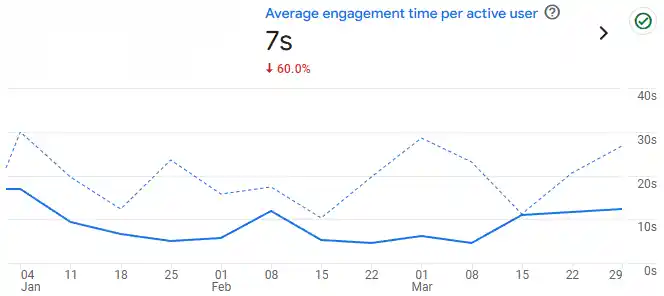
We have an extreme case with a client where their user engagement dropped drastically. This was due to too many plugins on their website that, at some point in Jan/Feb, updated and caused chaos on the backend. The result was a painfully slow load of the website.
The engagement rate dropped by a whopping 60%, while revenue dropped by 27.4%.
Those are not small numbers!
The Bloc Studio helped the client by fixing the backend mess and by the 8th of March we already saw increase in engagement.
The Cost of Bad Performance
If your site takes 3 seconds to load instead of 1, you could be losing up to 20% of your revenue before a customer even sees a product.
Search Engines and Answer Engines now prioritise “Core Web Vitals”. Not only does your website have to contain good content, but if your website is heavy and slow, AI assistants simply won’t mention or recommend you.
2. The Trust Gap
If you want to scale internationally then your goal is to win over customers who have never heard of you, right? But gaining their trust to turn them from website users into paying customers is not happening. Why?
If your design feels “amateur”, such as having inconsistent design throughout your website, or poor responsiveness (not scaling according to screen size) or just really a generic look and feel, you may trigger that “Stranger Danger” response.
Client Example
Diamond-dot Painting was getting constant queries about the legitimacy of the products. As we know, Temu and Shein have taken over the ecommerce world and with that comes duty tax. Users were interested in the product but unsure about whether this supplier was local or not.
This client had a lot going for them. They had excellent Google Reviews, a thriving Facebook community, as well as secure payment gateway options. It simply was not displayed on the website. There was no reason for the user to trust them.

The Bloc Studio implemented all the trust elements. Front and centre, the first thing you see is that this is a local supplier. Two important FAQs answered upfront. Secondly, the Google Reviews are clearly displayed with all the stars. And thirdly, their Facebook group showed that they had their very own community that was brand loyal.

The Cost of Zero Trust
High cart abandonment and bounce rate (meaning they land on your home page and leave after a couple of seconds without engaging). Shoppers will browse, but they won’t enter credit card details on a site that looks like a hobby project.
Are you making these mistakes? You may want to read these articles next:
3. Legal Friction and Compliance
You know who are prime targets for compliance audits? You.
Between the United Kingdom’s GDPR and the evolving US privacy laws (like CCPA/CPRA), your design needs to prioritise transparency. A “bad design” often buries the legal essentials or fails to implement proper cookie consent and data handling,
The Cost of No compliance
Beyond lost sales, the legal fines for non-compliance in 2026 can reach into the tens of thousands or pounds or dollars.
Don’t get caught with your pants down? You may want to read this article next:
No posts found!
4. Navigation Chaos
Clarity is a currency. If a customer has to “work” to buy from you, they won’t.
Poor Information Architecture (IA) is like navigating a maze with no end in sight. Your menus are confusing, shipping policies are buried (if they even exist) and product categories are illogical. The entire flow of your website is jerky and frustrating. People leave for greener pastures (or worse, your competition).
The cost of bad navigation
Instant gratification is a thing now. Every click needed to find what they are looking for increases the probability of your user leaving your website.
In the age of “instant gratification,” every extra click required to find a product or a return policy increases your Bounce Rate. If your site’s hierarchy is a mess, you are effectively paying for traffic that disappears because they couldn’t find the front door.
The Scaling Barrier: As you add more products and categories for international markets, a weak architectural foundation will cause your WooCommerce site to become unmanageable and un-searchable, stalling your growth.
If your online store’s hierarchy is whack, you’re basically paying for traffic that doesn’t even make it to the front door. With a weak IA foundation, managing your products, categories and tags becomes a mission to manage and unsearchable by your users.
No posts found!
5. Invisibility to AI
In this day and age, traditional SEO is only half the battle. In fact, it’s now but a fraction of the battle. It’s not just about keywords and phrases so that Google sees you. We now live in the time of GEO (Generative Engine Optimisation) and AEO (Answer Engine Optimisation).
If your WooCommerce store has “messy” code or poor schema markup, AI agents like Gemini and ChatGPT won’t be able to “read” your inventory to recommend it to users. Not only that, but AI is now bent on only supplying searchers with quality information and quality websites with good speed.
The cost of Being invisible to AI
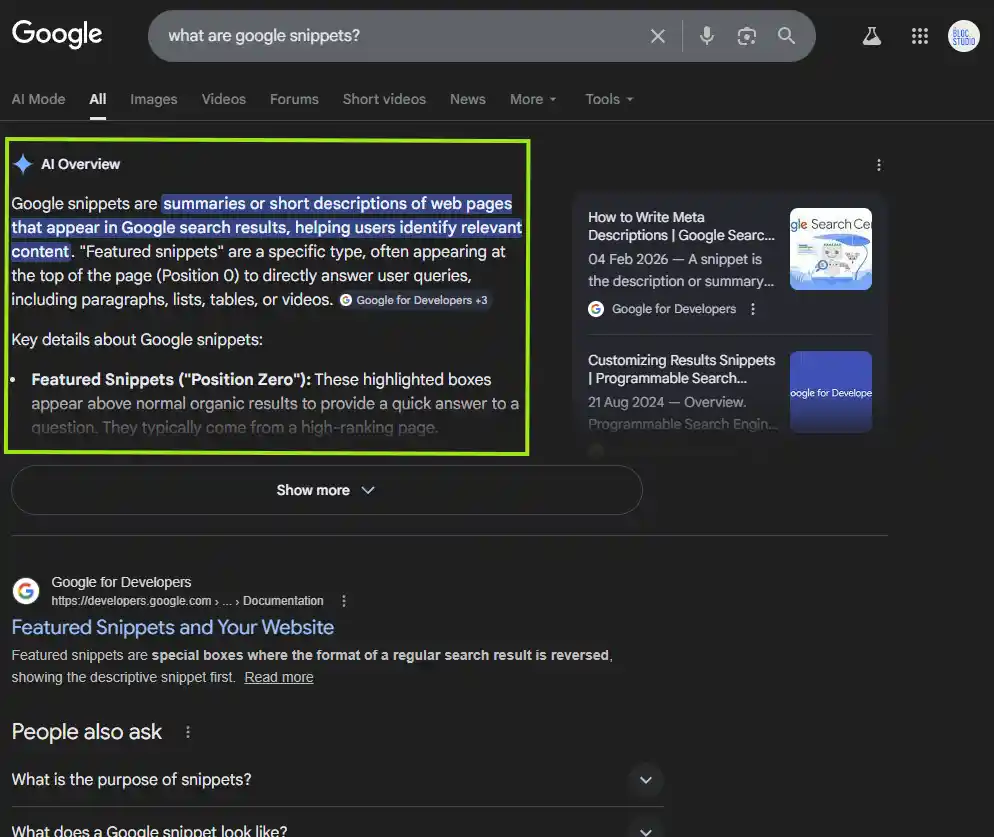
You disappear from Google’s Snippets or Bing’s “Answer Box” where 40% of modern shopping searches now end. Since Ai looks at your business from a holistic view this can either be to your advantage, or your detriment.
You will also fail to show up in AI engines such as ChatGPT or Gemini, with the bots prefering bettwer quality, easy to navigate shops served to those looking for your product.
How AI is brutally cracking down on your online store
SEO is no longer enough. How has Ai cracked down...
Read More6. Poor Product imagry and descriptions
In a physical store, customers can touch and feel a product. This is not the case for an online store (at least not yet).
Photos and descriptions are all the users has to go by. So, what are you not showing the best and being as descriptive as you possible can?
Poor image quality, lighting, composition and vague descriptions make your future-customer feel like they are taking a gamble with their money.
The cost of Being Vague
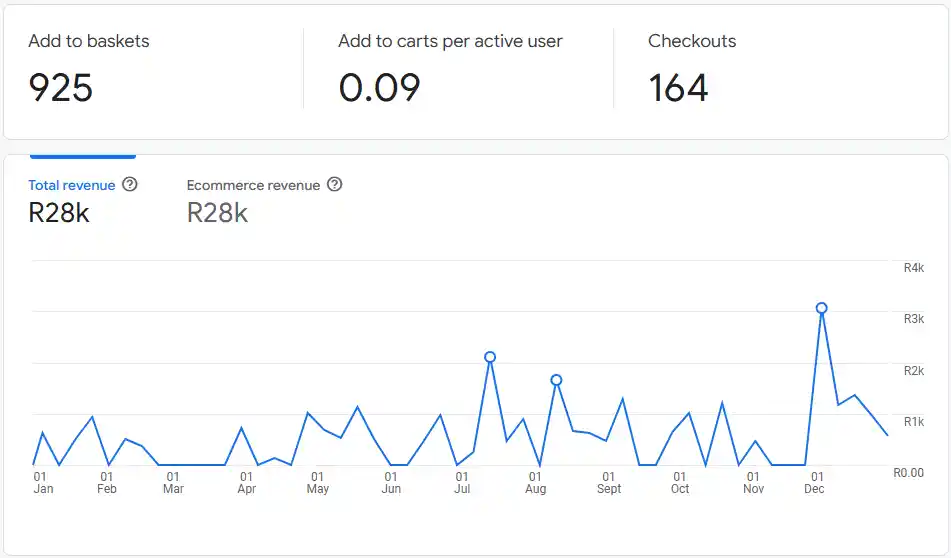
Your conversion rates sink and your analytics show a lot of “Add to Cart” by no “Checkouts”. Your generic or stock photography could be costing you quite a lot, while your descriptions are failing to convert a viewer into a customer.
Get Moving or get left behind
What once was is no longer!
No longer do we rely on search engines to give us the highest-ranking shops because they are keyword/phrase rich. No longer do we manually research businesses and products before we decide to buy. And no longer do we tolerate slow page loading in this world of “me want now!”
It’s not that SEO is dead, it’s just evolving. And with evolution comes adjustments. If you do not keep up, you get left behind with robots leading the way.