Your website is no longer just a digital storefront; it's...
Read MoreSEO isn't dead. It just evolved.
So what can we learn from this? The new game has no rulebook, because it isn’t about rules and keywords anymore; it’s about meaning.
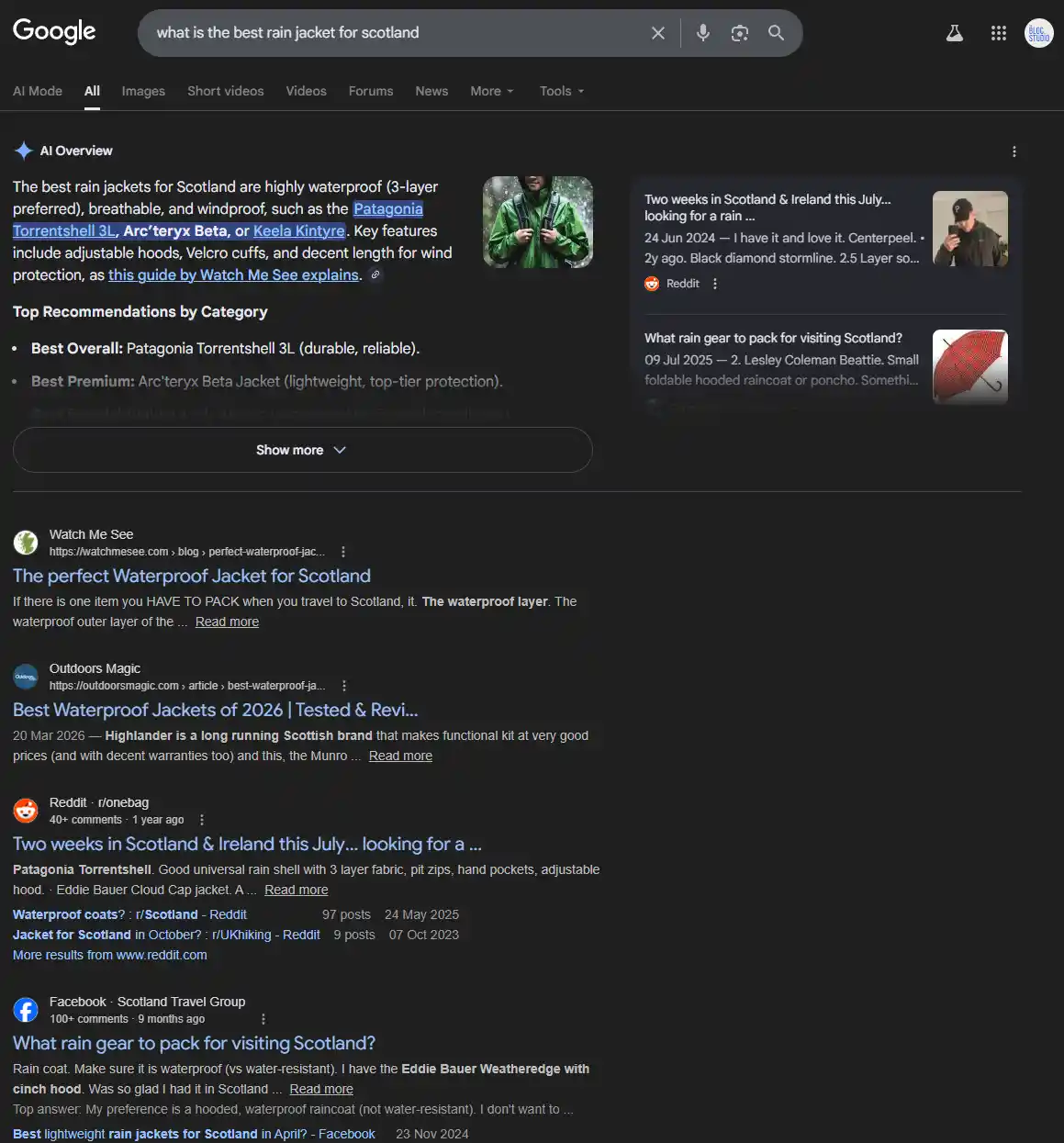
Google’s AI Overviews, Perplexity, ChatGPT Search, and Bing Copilot don’t match strings of text. They interpret intent. When a shopper types “something waterproof I can wear hiking that doesn’t look too outdoorsy”, the AI doesn’t hunt for a page stuffed with “waterproof hiking shoe.” It looks for the store that best understands what that person actually wants.
What does this tell us?
ChatGPT search prompts now average 60 words. This is nearly four times the length of a traditional Google query. This gap tells us everything about how buyer behaviour has shifted. People are not searching anymore; they are having conversations. The stores that show up in those conversations aren’t the ones with the most keywords. They’re the ones with the most context, the clearest expertise, and the most specific answers. That is the new SEO. And it rewards the smart over the big.
This is the moment small stores can beat the giants
Here’s what the retail giants haven’t figured out yet: in AI search, a £2 million ad budget does not buy you a citation. AI platforms value content quality and comprehensiveness over domain authority.
A well-researched, specific answer from a small business can outperform shallow content from a major brand. This is the great leveller.
A boutique running shoe store that publishes genuinely expert guidance on pronation, trail surfaces, and foot width, backed by proper product schema, structured FAQ pages, and clean review markup, will get surfaced by AI ahead of a sports direct page stuffed with stock photography and generic descriptions.
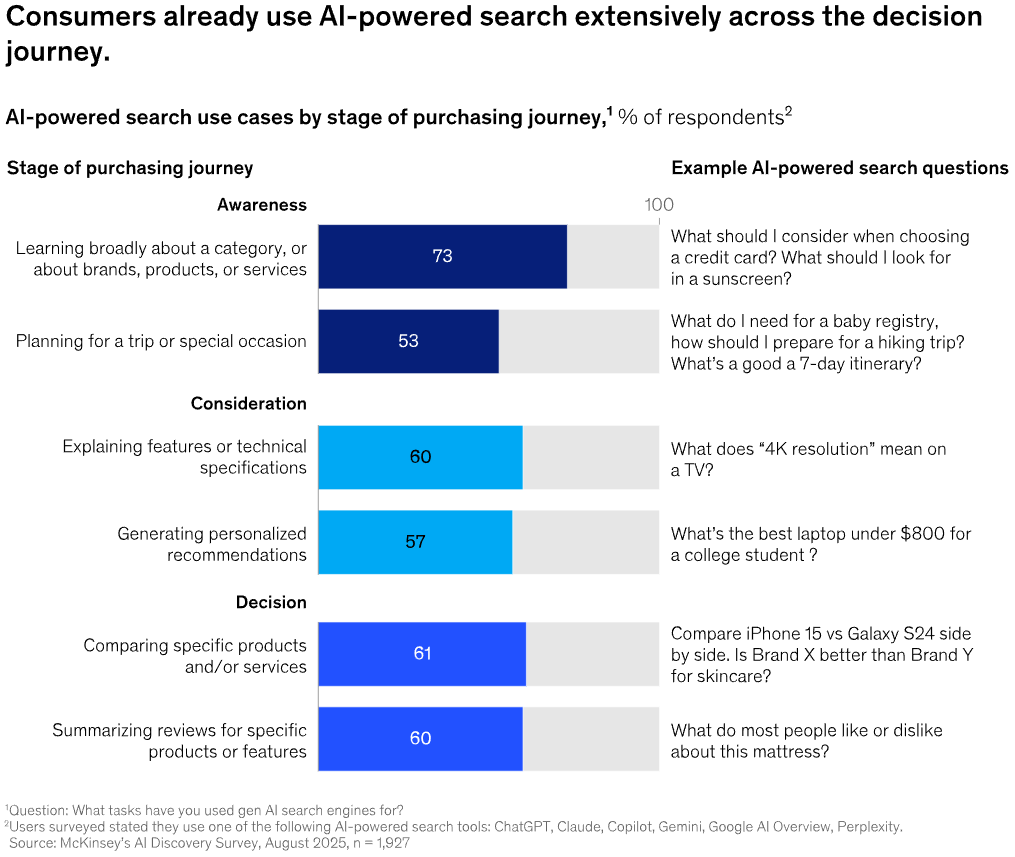
Research from McKinsey found that a brand’s own website accounts for just 5 to 10 percent of the sources AI search draws from. The rest comes from third-party reviews, editorial mentions, forums, and user-generated content. That means the independent store with genuine community trust, real customer reviews, and niche authority is sitting on a goldmine.
Case Study: Snow Aurora
Case Study for Snow Aurora Engineering Trust: How Snow Aurora...
Read MoreHow to make your store AI ready
1. Stop being Vague
Ditch the vague marketing copy, such as “premium quality,” “designed for you”, and replace it with specific, structured information such as materials used, dimensions of product, use cases you’ve investigated, compatibility, and real answers to the questions your customers actually ask.
AI engines cite on average only 2 to 7 domains per response compared to the ten blue links Google used to serve up. You need to make every bit of information count!
2. Speak to Ai and your customers
Add schema markup so that AI can parse your catalogue cleanly. Build out FAQ sections written in plain conversational language, not keyword-stuffed sales speak.
3. Get a reputation
Earn mentions on third-party sites, review platforms, and industry publications. AI systems favour content backed by reputable citations and consistent authority signals. In a nutshell: Be relevant!
4. Speak to Ai and your customers
Stop optimising purely for rankings and start optimising to be named. When a shopper asks an AI for the best option in your category, you either appear in that answer, or you don’t exist.
No posts found!
What happens if you do nothing?
The stores that ignore this shift won’t get a warning. Their traffic won’t fall off a cliff overnight, it will bleed out slowly, month by month, as AI answers replace the searches that used to send customers their way.
Gartner has predicted that traditional search engine volume will drop 25% by 2026, as AI tools become what they call “substitute answer engines” replacing queries that would previously have landed on your website. And the longer range projection is bleaker still with organic search traffic could decline by 50% or more as consumers fully embrace AI powered search.
McKinsey projects that by 2028, $750 billion in US retail revenue will flow through AI powered search, and every dollar of that will go to stores that showed up in the answer.
The hard truth is this: invisibility in AI search is not a temporary dip you can recover from with a site refresh or a new ad budget. Once a competitor owns that citation in your category they become the default recommendation, and displacing them gets harder every month you wait.
The time to build your AI search strategy is not when you notice the traffic drop. It’s now.
6 things To do this week that gets results in 90 days
We’re not going to leave you hanging high and dry. Of course, we are kind souls and will share some steps that you can action in the next few days. Do these six tasks and results will start to show themselves in less than 90 days from implementation.
1. Run your store through an AI search tool
Open ChatGPT, Perplexity, or Google’s AI Overview and type in the kind of question your ideal customer would ask. Do you appear? Does a competitor? That answer tells you exactly where you stand right now.
2. Rewrite your top 5 product descriptions
Cut the vague adjectives. Replace them with specifics: materials, dimensions, use cases, who it’s for, and who it’s not for. Write like you’re answering a question, not broadcasting a brand message.
3. Add product schema markup
If your store runs on Shopify, WooCommerce, or most major platforms, there are plugins that handle this. Product schema tells AI exactly what you sell, at what price, with what attributes. Without it, AI is guessing. And guess is not ideal.
4. Build a proper FAQ section
Write it in plain conversational language, the way your customers actually ask questions. Not “What are the material specifications of this product?” but “Will this jacket keep me dry in heavy rain?” Those are the prompts AI is answering.
5. Get mentioned outside your own site
Reach out to niche blogs, get reviewed on independent platforms, answer questions on Reddit and forums in your category. AI draws from across the web, and your own site is only 5 to 10 percent of what it reads.
6. Stop measuring only traffic, start measuring visibility
Check whether your brand name appears in AI generated answers for your key buying queries. That is your new first page of Google. If you are not on it, this is your starting point.
How AI is brutally cracking down on your online store
SEO is no longer enough. How has Ai cracked down...
Read More